Getting attention is a key aspect of marketing. Having people interested in your brand or campaigns can be a challenge, especially when everything is easily ignored nowadays. There are many strategies we can use to grab people's attention, but sometimes it's never enough because they're not engaged enough with the idea you made.
Fortunately, there is a way to command attention and keep people engaged with your brand from the very first second. That strategy is Stopping the Scroll, a way to interrupt a user's passive behavior and allow meaningful interaction between your brand and your customers.
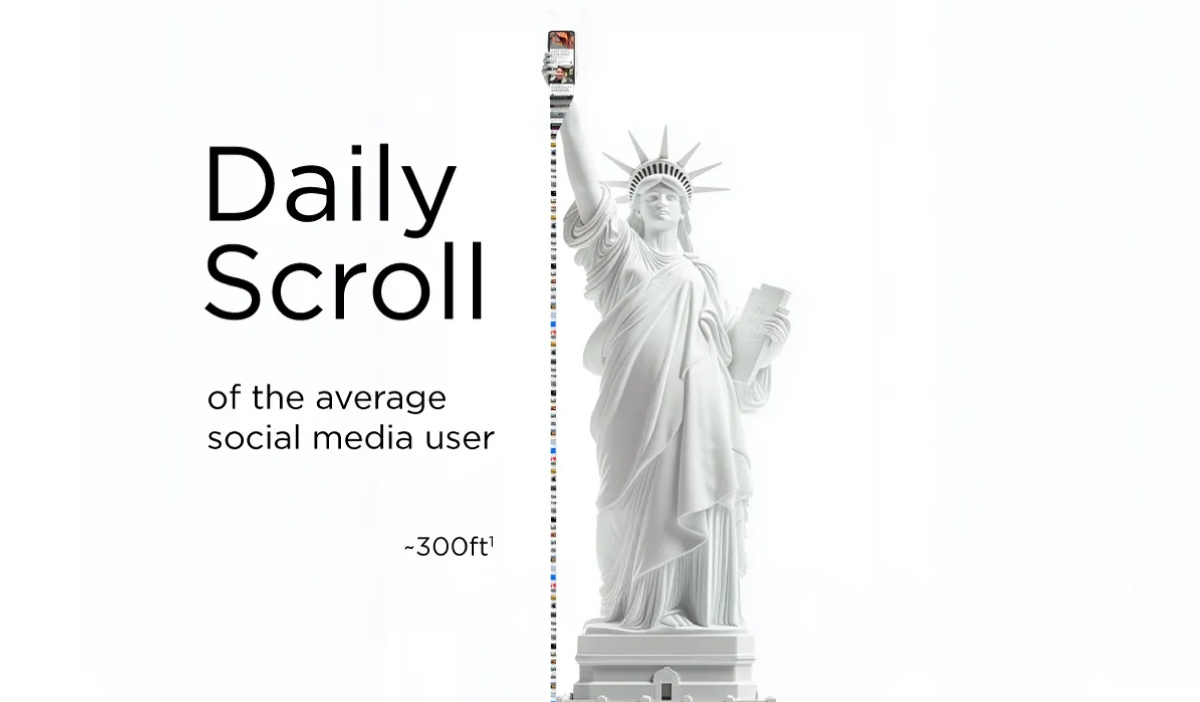
"Research shows that the average person scrolls through roughly 300 feet of content every day—the height of the Statue of Liberty."
This strategy is vital today due to the rise of mobile usage and the high volume of content consumed. It is a great strategy to make a brand stand out and be seen in a light that is active, bold, and communicative with its audience.
But first, what is "Stopping the Scroll"?

Stopping the scroll is a technique that uses visual and psychological "speed bumps" in a high-speed digital context. This creates a unity between eye-catching design and immediate value, like using a bold high-contrast graphic to pause a user's thumb in exchange for a powerful insight! This makes a program look more credible and gives your brand a positive image to increase your sales and market reach.
This works because our brains crave Pattern Interruption. We are wired to ignore things that look "typical." When we see something unexpected, our "orienting response" kicks in—a sensor that gives us a feeling of curiosity and motivation. In other words, a "curiosity sensor!" Seeing a striking face or a bold headline makes our brains work toward understanding that goal. This creates interaction for the market and the content strategy made, which makes it a great marketing strategy idea.
Benefits of "Stopping the Scroll"

- User Engagement: Pattern interruption makes users pause on the tasks given to them, making it a great way to build engagement between the user and the brand.
- Customer Loyalty: Customers love a brand they can vibe with, especially when they feel the brand understands their needs at a glance, making them potential loyal customers.
- Conversion Rates: Capturing attention early can incentivize desired actions, leading to higher conversion rates for things like purchases, signups, or app downloads.
- Algorithm Performance: Platforms track "dwell time." By stopping the scroll, you gather valuable data for the algorithm to know your market more, showing your content to more people.
- Brand Recall: Unique visuals can be used to test new brand styles in a fun environment, gathering valuable feedback on what your audience remembers most.
The Risks of Attention-Based Marketing
Grabbing attention can be a powerful tool, but there are some traps to avoid:
Inauthenticity
Always make sure your "hook" matches your actual message, or else the audience will notice the intended intention is only to click-bait them.
Overused Mechanics
Many other brands use "shock" strategies, and this leads to repeated use of the same tricks. Be careful to do your research so your visuals stand out from the rest.
Poor Design
If your "speed bump" is not engaging enough or too messy for the audience to understand, they might have a more negative review of your ideas.
Focus on Hook over Substance
If the only reason people stop is for a shock factor, they may not be interested in your product once the shock is gone. Stopping the scroll should create a fun and engaging experience, with the "hook" being a bonus.
Cost and Development
It is easy to get lost in the idea of being "loud" before realizing that over-producing content affects your brand budget and reputation negatively.
Key Takeaways
Stopping the scroll is a strategy that is great for attracting attention and keeping users engaged with your brand, but if not careful, it might lead to negative reviews or just a waste of resources. Every strategy has its own benefits and risks, and attention-based marketing is no different from those aspects.
Here at Verafede, we can always give you the best ways to stand out and create meaningful events for your ideas! So feel free to contact us and let us give you the best memory we can offer everyone!
Frequently Asked Questions
What is "Stopping the Scroll" in content marketing?
Stopping the Scroll is a technique that uses visual and psychological "speed bumps" in a high-speed digital context. It creates a unity between eye-catching design and immediate value to interrupt a user's passive scrolling behavior and encourage meaningful interaction with a brand.
Why is stopping the scroll important for brands?
The average person scrolls through roughly 300 feet of content every day. Brands that can interrupt passive scrolling see higher user engagement, better conversion rates, improved algorithm performance, and stronger brand recall.
What are the risks of attention-based marketing?
Key risks include inauthenticity (mismatched hooks and messages), overused shock mechanics, poor design, prioritizing the hook over substance, and over-producing content that inflates costs and damages brand reputation.
References & Sources
- • The 300-Foot Scroll: NetNewsLedger – Average Person Scrolls 300 Feet Daily
- • The 1.7-Second Window: Marketing Insider Group – Winning Attention on a 1.7 Second Scroll
- • Psychology of Curiosity: Skyword – The Curiosity Gap and Consumer Psychology
- • F-Pattern Reading Habits: Nielsen Norman Group – F-Shaped Pattern for Reading Web Content
Ready to stop the scroll?
Message us here and let us help you turn your ideas into unforgettable brand experiences.
Contact Us